

Janine Jivani used to regulate healthcare for a living. Five years of it. She knew the rules. She knew how the system thinks about illness, and how little the same system thinks about wellness. She also knew, quietly and for a long time, that the job wasn’t hers forever.
Today she runs Lilac & Leaf Wellness, a small Canadian brand of organic herbal teas and wellness products. It started, like a lot of good things do, with a gap she couldn’t stop noticing — and a small cheque from Futurpreneur that turned an idea into an inventory order.
This spring, her story matters for another reason. Futurpreneur is a Gold Sponsor of Vancouver Startup Week (VSW) 2026, and over two mornings at VSW HQ we’re hosting the kind of programming that helps people like Janine take the leap in the first place. There’s even a room with our name on it now: the Futurpreneur Stage at VSW HQ.
The Numbers Canada Keeps Forgetting About Women-Led Businesses
Start with the scoreboard. Women own roughly 20% of Canadian businesses. Those businesses bring in over $90 billion a year, employ close to one million people, and contribute around 9% of Canada’s GDP. Those aren’t rounding errors. They’re an economy inside the economy.
The interesting part is what happens when a support system is actually built for women. More than 40% of Futurpreneur-backed businesses are women-led, which is over double the national average. That doesn’t happen by accident. It happens because the loan sizes are right-sized for early days, because the mentor match is taken seriously, and because a woman walking in with a first-time idea isn’t competing against a Series A pitch deck to get attention.
Representation in the funding room changes who gets to build. Which brings us back to Janine.
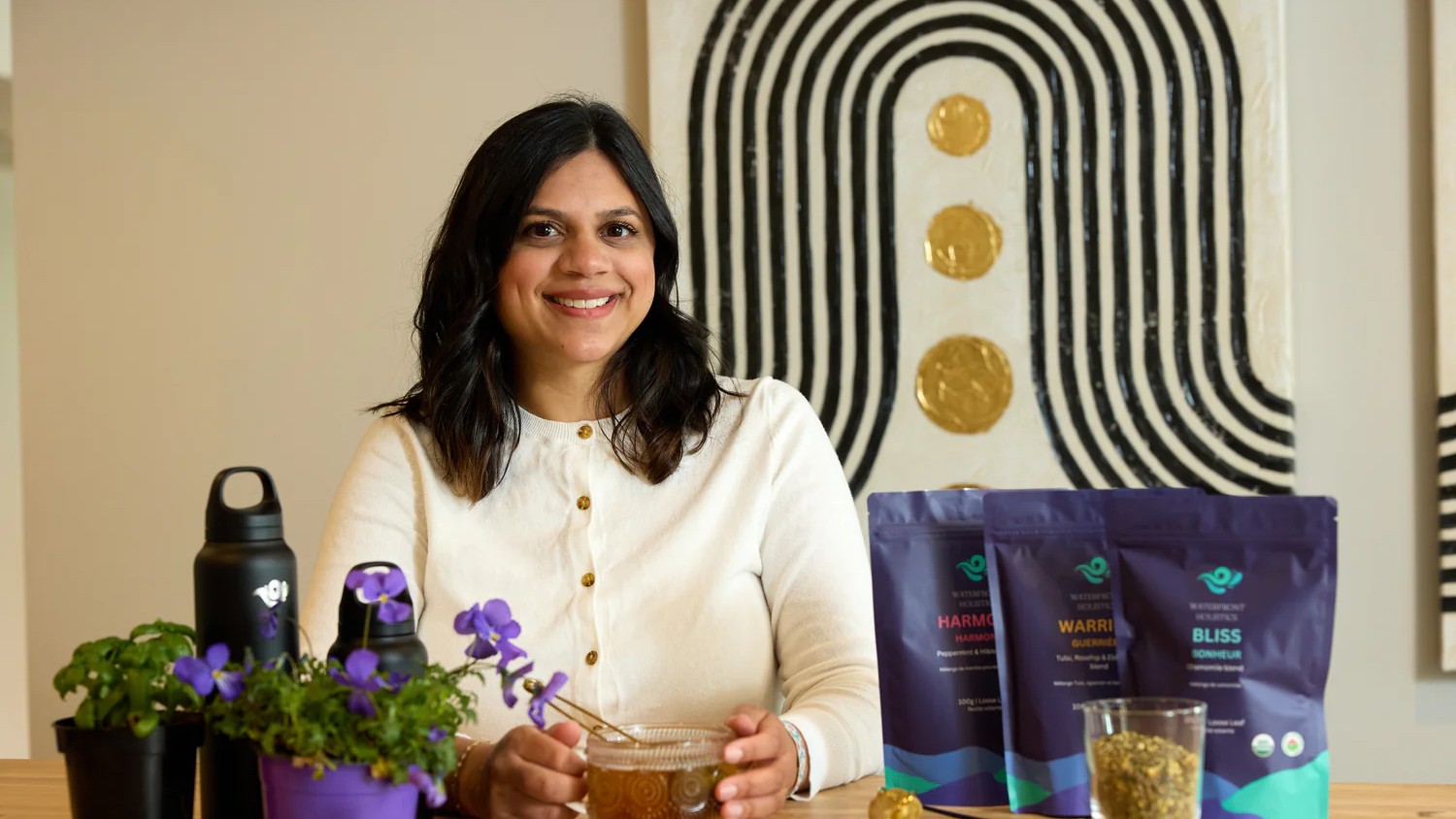
Meet Janine Jivani, Founder of Lilac & Leaf Wellness
From Regulator to Founder
Janine spent her twenties inside healthcare regulation. Good training. Ethics, safety standards, quality control, the boring stuff that keeps people alive. But she describes it in words most founders eventually find for themselves: she felt “disconnected from my work,” and the role “didn’t really allow me to think creatively.”
Two things were true at the same time. The Canadian healthcare system she worked inside was, by design, aimed at managing illness. And the wellness market that tried to fill the gap on the other end? Largely unregulated. Big claims, uneven quality, a lot of noise. She had a rare combination of skills for that market: she understood both the science and the paperwork, and she had opinions about what “trustworthy” should actually mean.
So Lilac & Leaf was never meant to be another pretty tea brand. The product is organic herbal tea and wellness goods, yes. The positioning is harder-earned: a brand built by someone who used to sit on the regulator’s side of the desk.
Heritage, Representation, and Why It’s in the Brand
Janine is Kenyan on one side, Irish-Scottish on the other. That shows up in how she thinks about her customers and her values. “Representation and diversity are extremely important to me,” she says, “and are part of my business values.”
You hear that phrase a lot from founders in 2026. With Janine, it’s worth taking seriously because it shaped the actual product roadmap. The current rebrand of Lilac & Leaf, which she’s rolling out with a new website, a series of in-person workshops, and a growing library of resources, is built around women’s empowerment. Not as a marketing layer on top. As the thing itself. She wants the brand to be a place women can trust when they’re looking for information about their own wellness and can’t tell who’s selling them something and who’s telling them the truth.
Where Futurpreneur Came In
Janine came to Futurpreneur for the financing, and she stayed for the mentorship. That order matters. Capital unlocks the obvious stuff: inventory, packaging, a working website, a first round of photography that doesn’t look like it was shot on a kitchen counter. Mentorship unlocks the harder stuff. It’s having someone to call at nine at night when a supplier flakes. It’s being told, honestly, that your pricing is wrong.
“Becoming an entrepreneur has been transformative, continually teaching me what I’m truly capable of.” — Janine Jivani, founder, Lilac & Leaf Wellness
She’s not unusual in this. She’s representative. Most of the women-led businesses in the Futurpreneur portfolio come in looking for money and leave with something closer to a team.
The Women in Entrepreneurship Initiative, Presented by TD
Janine’s financing came through Futurpreneur’s Women in Entrepreneurship Initiative, presented by TD. The program packages three things that rarely show up together for a first-time founder: loan financing at a scale that makes sense for a pre-revenue or early-revenue business, mentorship matched to the actual sector, and resources tailored to the realities women founders face — which are not always the same as the ones a generic incubator curriculum is designed for.
If you’re a woman thinking about starting a business in Canada, or you know someone who is, that’s the link to send them. It’s also, not incidentally, why Futurpreneur showing up at VSW matters this year.
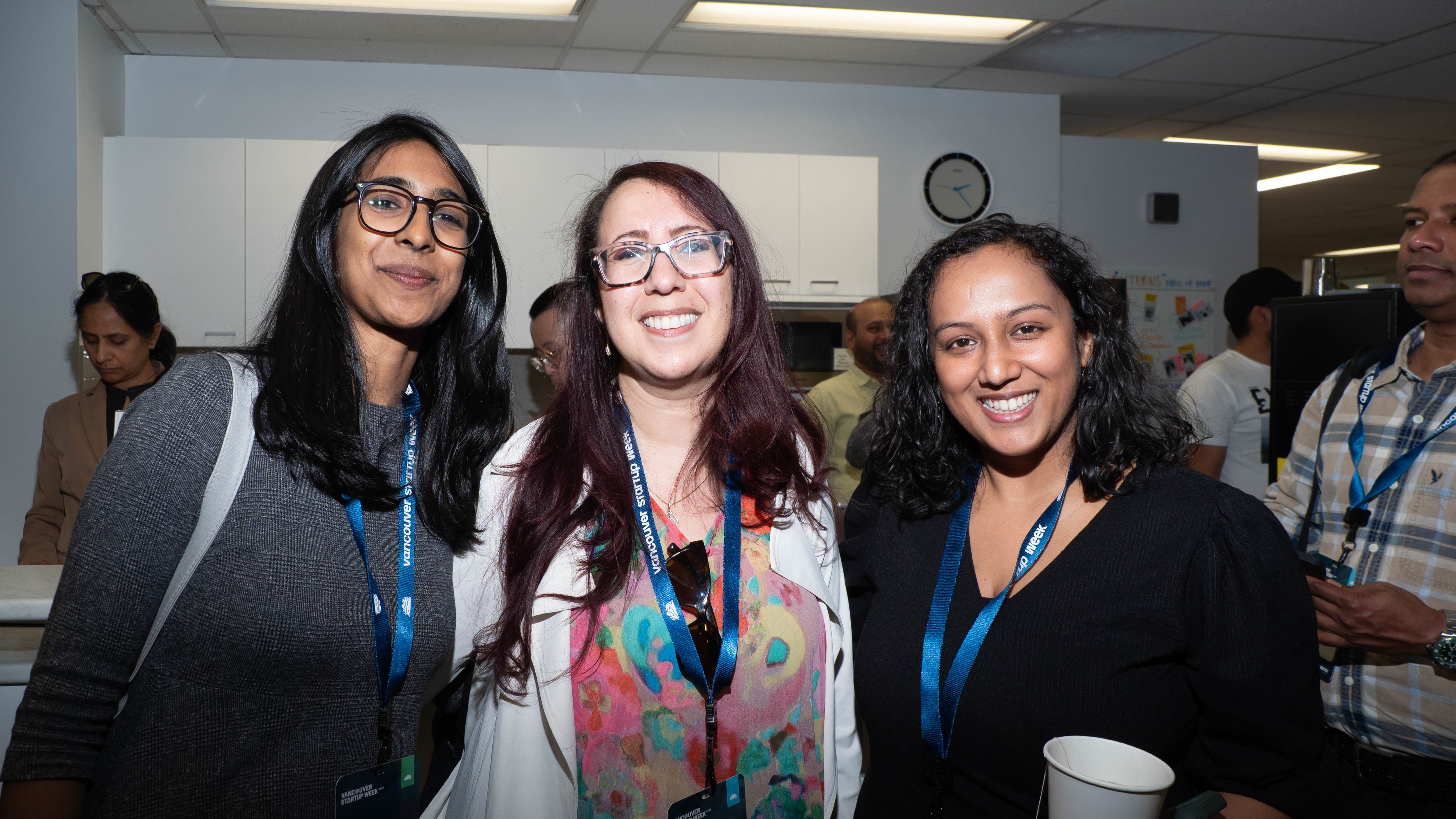
Futurpreneur at Vancouver Startup Week 2026
Why a Gold Sponsorship
VSW is not a trade show. It’s a week where British Columbia’s startup community compresses into the same rooms and figures out what it wants to be next. Founders meet investors. Almost-founders meet actual founders and realize the gap between them is smaller than they thought. Mentors find the people they’ll spend the next year helping. A lot happens sideways, in the in-between moments after a panel ends and before the room clears out.
Sponsoring VSW at the Gold level means Futurpreneur is inside that week, not beside it. We’re on the signage. We’re in the programming. And for the first time, we’re physically anchored in the building.
Introducing the Futurpreneur Stage at VSW HQ
VSW has named a space at their headquarters after us. The Futurpreneur Stage at VSW HQ is where our programming lives for the duration of the week, and it’s a visible reminder that young and underrepresented founders in this country have an institution standing behind them with a name, a cheque, and a chair at the table.
For sponsors, a named stage is branding. For founders, it’s a wayfinding signal. “Futurpreneur” on the door means the conversation inside is pitched at your stage of the journey, not someone five rounds ahead of you.
Event 1 — From Employee to Entrepreneur: Making the Leap
- When: Tuesday, April 28, 2026, 4:00–5:30 PM PT
- Where: Futurpreneur Stage, VSW HQ (Vancouver)
- Register: site.pheedloop.com/event/vsw2026/register
Most of the founders we back didn’t start with a business. They started with a job, a side idea, and a spreadsheet in a private tab tallying how many months of runway they could scrape together if they actually pulled the trigger. “Making the Leap” is designed for exactly that person.
The session is built around honest stories, not highlight reels. We’re bringing in founders who’ve walked out of stable roles, including some whose arcs will sound a lot like Janine’s move out of healthcare. We’ll talk about the financial runway question everyone has and no one wants to ask out loud. We’ll talk about how to test a business idea while you still have a paycheque, and how to tell whether what you’re feeling is fear or good instincts. Come early if you want the good seat.
Event 2 — The Legal Side of Startups: A Fireside Chat for Founders
- When: Friday, May 1, 2026, 9:00–10:30 AM PT
- Where: Futurpreneur Stage, VSW HQ (Vancouver)
- Register: site.pheedloop.com/event/vsw2026/register
Legal is where promising startups quietly lose months. Incorporation structure, co-founder agreements, IP assignment, employee versus contractor classification, the handful of regulatory questions that apply to your category and no one else’s. Most founders learn about these by getting one of them wrong.
This fireside chat is for anyone who doesn’t want to learn that way. We’re sitting down with lawyers who work with early-stage Canadian companies day in and day out. Come with your stupidest question. The whole format is designed around the fact that you’re not going to ask it when the clock is running at $450/hour.
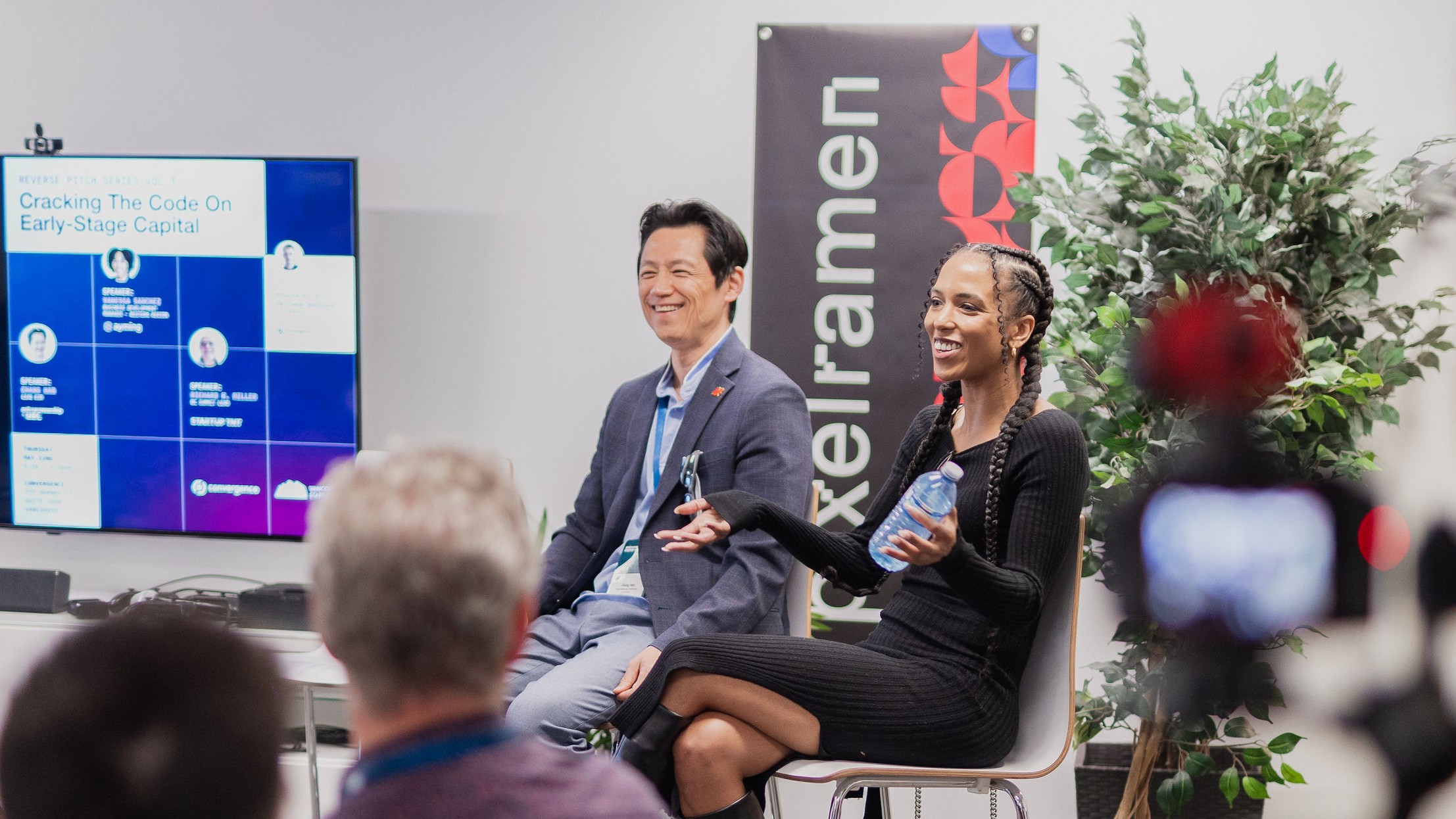
What Actually Helps a Woman Founder Succeed
If you’ve followed women-in-entrepreneurship coverage for any length of time, you already know the talking points. Fund more women. Mentor more women. Include more women on panels. All true. All easy to say.
The less obvious point Janine’s story makes is that those three things have to be stitched together or they don’t work. The funding without the mentor is a loan you’re servicing on your own. The mentor without the funding is advice you can’t act on. The panel without either is inspiration that fades by Monday.
Futurpreneur is built to stitch them together. VSW is where that stitching becomes visible to the rest of the ecosystem. That’s why we’re not just writing a cheque for the logo placement. We’re showing up for two mornings at a named stage, putting our people in the chairs, and making ourselves easy to find for whoever walks into that building trying to figure out if they belong there.
How to Get Involved This Spring
- If you’re thinking about starting a business, come to the April 28 session. Register here.
- If you’ve already started one, come to the May 1 legal fireside. Same registration link.
- If you’re a woman entrepreneur, look at the Women in Entrepreneurship Initiative, presented by TD. Financing, mentorship, resources built around you.
- If you’ve already built the thing, consider becoming a Futurpreneur mentor. The match matters.
- If you want to hear more of Janine’s story in her own words, the original profile is here.
The Point
Canada’s next economic chapter will be written in a lot of unglamorous places. In the back of a shop where someone is labelling a first run of tea tins by hand. In a VSW breakout room where a second-year engineer finally admits she’s been working on something on the side. On a Futurpreneur mentor call at 8 PM on a Thursday when a founder needs a sanity check before she signs a lease.
Investing in women isn’t a campaign. It’s just where a lot of the growth is. Janine figured it out. VSW is helping more people figure it out. And for the week of May 20–23, we’re literally on the stage.


